Want to be in the loop?
subscribe to
our notification
Business News
MOF EASES REGULATION FOR TAX REFUND
Deputy Minister Do Hoang Anh Tuan said that 287 businesses across the country were waiting for tax refunds but there are both objective and subjective reasons for the delay.
One of the reasons is that some enterprises owe the State budget but the State budget must also refund tax to these enterprises. However, under current regulations, the two debts are not allowed to be offset, so enterprises are required to settle debts with the State budget before receiving tax refund.
According to Tu?n, there are 20 enterprises facing this situation.
The ministry officially abolished the regulation via a document sent to local tax offices on Monday.
The ministry’s leader also asked the General Department of Taxation (GDT) to check and inform local tax agencies within 6 working hours upon receiving their proposals for tax refund approval.
If they receive approval, the agencies would then issue a decision to refund tax to enterprises and update the tax payers database.
Local tax offices must take full responsibilities if they are slow in refunding tax to enterprises, Tu?n said.
However, the ministry still requests localities to delay the tax refund if they detect any breaches of tax or customs regulations committed by companies or if tax payers are unable to prove the eligibility of the tax amount declared in their applications.
Tuan added that some businesses which were under scrutiny also have to be put in the waiting list.
Another reason for the tax refund delay is that some localities do not have enough funds to return to enterprises.
Nguyen Thi Tuyet, general director of the Nhat Tri Thanh Company which specializes in supply materials for the metallurgy industry, said the firm should have received VNÐ38 billion ($1.7 million) of tax refunds by the end of January, but due to a shortage of money, the local tax office delayed the refund until the beginning of February.
Nguyen Huu Quang, an official from the National Assembly’s Finance and Budget Committee, said a delay like this was not rare.
Deputy head of central Ða Nang City’s tax authority Nguy?n Ðình Ân said that there are 5-6 pending applications at his office because of capital shortages. Normally, due to the limited quota set for each locality, the GDT would approve the refund in accordance with the order of priority such as type of business, export and big investments.
Tuan said that the ministry had enough resources for tax refunds nationwide. Currently, funds reserved for tax refund total VNÐ3.8 trillion (US$173 million). However, he did not deny the possibility that “This man has much to eat but that man finds no small piece.”
He said HCM City now had only VNÐ92 billion ($4.2 million) in the reserve while it needed VNÐ800-900 billion ($36-41 million) for tax refunds. In contrast, the central Hà Tinh Province has VNÐ1.1 trillion ($50 million).
To fix the problem, the ministry would remove quotas set for each locality and be more flexible in allocating funds for tax refunds.
Ðinh Nho Hau, head of the Hà Tinh Province’s tax office, said that the changes in tax refund regulations would help tackle difficulties for both local tax offices and businesses.
He also suggested that there should not be any discrimination among enterprises. Tax offices should repay tax to enterprises right after they complete procedures applying for the refund, regardless if they are big exporters or investors.
Over the past two months, 3,100 applications were sent to local tax agencies and all of the enterprises successfully reclaimed tax with total amount of funds worth VNÐ13 trillion ($591 million). This year, the Government set aside VNÐ98 trillion ($4.5 billion) for tax refunds.
Source: VNS
Related News
VIETNAM ECONOMY INVESTMENT
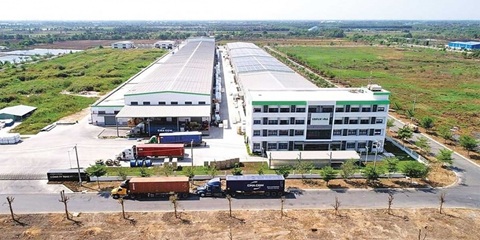
FOREIGN INVESTORS SEEKING A SYNCHRONISED MANUFACTURING ECOSYSTEM
Instead of focusing only on land costs and incentives as usual, foreign investors are seeking a synchronised manufacturing ecosystem, from stable power supply and logistics to shared infrastructure and the convenience of completing residence procedures for experts to serve their long-term investment in the country.
INFRASTRUCTURE / CONSTRUCTION / LOGISTIC / PORT
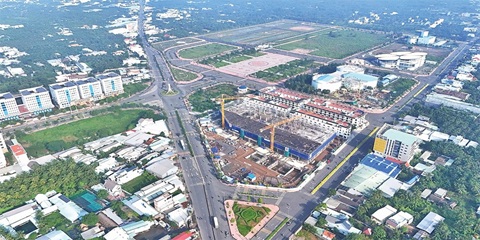
DONG THAP PROVINCE STEPS UP INDUSTRIAL EXPANSION AND INFRASTRUCTURE CONNECTIVITY
Accelerating public investment, strengthening inter-regional connectivity, and expanding industrial land are helping Dong Thap efficiently bolster competitiveness and drive economic growth. Following the 2025 merger of the former Dong Thap and Tien Giang provinces, the expanded Dong Thap province in the Mekong Delta faces mounting pressure to accelerate infrastructure development and strengthen connectivity among local economic zones, urban areas, industrial parks (IPs), and production centres.
PROPERTY / INDUSTRIAL ZONE
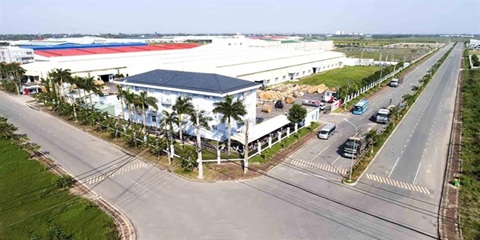
HCM CITY ATTRACTS US$5.7 BILLION INTO EXPORT PROCESSING AND INDUSTRIAL ZONES
HCM City attracted US$5.7 billion in domestic and foreign investment into its export processing and industrial zones during the first nine months of 2026. The figure exceeded the city's full-year target by 31 per cent, highlighting strong momentum in high-quality industrial investment under Resolution No.10-NQ/TW. Total investment reached 131 per cent of the 2026 target of $4.25 billion and represented a 29 per cent increase compared with the same period in 2025, according to the city's Export Processing and Industrial Zones Authority (HEPZA).

BANKING / FINANCE / INSURANCE / TAX
REMITTANCES TO HCM CITY RISE NEARLY 40% IN Q3
Remittances to HCM City reached more than US$2.83 billion in the third quarter of this year, up 39.5 per cent from the previous quarter and 3.6 per cent year-on-year. This was the first quarter showing positive annual growth this year, helping narrow the decline in remittance inflows over the first nine months. According to the State Bank of Vietnam (SBV)’s Regional Branch 2, remittances transferred to HCM City through credit institutions and economic organisations totalled $2.835 billion in Q3, an increase of more than $802 million from the previous quarter.

VIETNAM ECONOMY INVESTMENT
LOCALITIES REPORT BREAKTHROUGH RESULTS IN FDI IN FIRST NINE MONTHS
In Ho Chi Minh City, total registered capital reached $17.2 billion in the first nine months, up 4.2 times from the same period last year. The figure included more than $9.35 billion in newly registered capital and over $4.9 billion in additional capital for existing projects. Foreign investors also registered more than $2.9 billion through capital contributions and share purchases.

TECHNOLOGY
TECH SECTOR GROWTH OPENS UP OPPORTUNITIES FOR VIỆT NAM TO GO GLOBAL
The growth of the electronics, semiconductor and high-tech sectors worldwide is opening up a variety of opportunities for Vietnamese enterprises to integrate more deeply into the global supply chain. However, to become suppliers for these corporations, domestic enterprises must meet rigorous standards regarding quality, technology, productivity and order fulfilment capabilities.
Events Sponsors






















